Japanese Head Spa in Phnom Penh: What It Is and Why It's Worth Trying
- 2 days ago
- 8 min read

Something shifts the moment your therapist's hands make contact with your scalp. It is not quite like any massage you have had before — quieter, slower, more precise. If you have seen the videos circulating on TikTok or noticed a friend return from an appointment looking unusually calm, you have probably wondered what a Japanese Head Spa actually is.
Cholsa Spa introduced Japanese Head Spa to Phnom Penh as one of our signature treatments, and the response has been consistent: guests arrive uncertain and leave converted. This is what the treatment is, how it works, and why it has become one of the most requested services at our studio in Tuol Tompoung, near Russian Market.
What Is a Japanese Head Spa?
Origins and Philosophy
Japanese Head Spa — known in Japan astōsui-spa— emerged from a beauty and wellness culture where scalp health has long been treated as the foundation of hair health. In Japan, specialist scalp clinics have existed for decades, blending principles from traditional Chinese acupressure, shiatsu massage, and modern trichology, the science of hair and scalp condition.
The underlying philosophy is straightforward: a healthy scalp is a nourished one. When circulation is poor, tension is held in the fascial tissue, or the scalp's sebum balance is disrupted, the effects show — in hair quality, in persistent tension headaches, in that low-grade tightness you carry across your neck and shoulders without quite knowing it is there. A Japanese Head Spa works to address all of these, from the outside in.
How It Differs from a Regular Head Massage
A head massage is one component of a Japanese Head Spa, but the two are not the same thing. A standard head massage typically addresses surface tension. It feels good, it relaxes, and it is usually done in a few minutes as part of a longer session focused elsewhere.
A Japanese Head Spa is a dedicated treatment — 60 or 90 minutes — structured around specific goals: cleansing the scalp, improving circulation through targeted acupressure, applying treatments that address scalp condition, and finishing with techniques that leave the scalp balanced rather than just temporarily eased. The treatment involves the scalp, neck, shoulders, face pressure points, and the skin. It moves slowly and deliberately, not just loosening tension but working through it layer by layer.
What Happens During the Treatment
At Cholsa Spa, the Japanese Head Spa follows a structured sequence, though the approach is always adjusted to what your scalp needs on the day.
The session opens with the soft sound of a bell — a small ritual that marks the shift from the outside world into the treatment space, and invites you to arrive fully. It is a gentle signal, but it works.
The treatment begins with a scalp analysis. Before any product is applied, your therapist assesses your scalp's current condition — whether it is dry, oily, congested, or sensitive. This step matters because the treatment should respond to your scalp specifically, not follow a generic script.
Then comes the first appearance of one of the treatment's most distinctive elements. A gold ring-shaped fixture arcs gently over the head and releases a continuous, warm waterfall — a halo of water that cascades slowly and evenly over the scalp and through the hair while the therapist works. It is an elegant way to open the cleansing phase, and most guests describe it as the moment the body registers it is somewhere different. The therapist moves through the hair as the water falls, preparing the scalp for what follows.

A treatment serum suited to your scalp type is then applied. The massage begins: slow, rhythmic pressure across the scalp using fingers, thumbs, and techniques drawn from acupressure traditions. You will feel pressure applied to points along your hairline, crown, and the base of your skull — the areas where tension accumulates most without us noticing.
At intervals, a peacock feather is drawn lightly across the scalp and face — a sensation so delicate it tends to catch guests off guard. The contrast between precise, deliberate pressure and that barely-there touch creates a kind of sensory reset, drawing the nervous system further into rest.
A specialist head massage device — what our team calls the turtle machine — follows. It applies broad, even pressure across the crown in a way that no hand technique quite replicates: grounding, rhythmic, almost meditative. Guests who have experienced it often describe it as the moment they finally let go.
From there, the session moves to the neck, shoulders, and a facial. Light cleansing and acupressure across the brow, jaw, and cheekbones address the tightness that builds from screens, sustained concentration, and the unconscious holding of stress in the face. Many guests fall asleep during this phase. The ones who do not usually wish they had.
The gold ring returns at the close — the same warm waterfall, slower now, washing the treatment through as the session draws to a quiet end. A conditioning rinse follows, and then a moment of stillness before you return to the day.
The Benefits — What You Might Notice
For Scalp and Hair Health
The most visible and measurable benefit of regular Japanese Head Spa sessions is scalp health. Improved circulation brings more oxygen and nutrients to hair follicles, which affects hair quality over time — texture, the overall condition of the hair at its roots, and growth rate. Guests dealing with dry or flaky scalps often notice a meaningful difference after two or three sessions, as the treatment helps regulate oil production and clears product buildup that daily washing does not fully address.
For guests concerned about thinning hair or a sluggish scalp, this treatment creates the conditions for healthier growth — not through any single ingredient, but through consistent mechanical and circulatory stimulation that the scalp responds well to over time.
For Stress and Mental Clarity
The stress relief benefit is harder to quantify but consistently reported. There is a significant concentration of nerve endings in the scalp, face, and neck, and sustained acupressure in these areas produces a parasympathetic response — the nervous system shifting from active stress mode into genuine rest. Guests frequently describe a feeling of mental clarity after a session that is distinct from the post-massage heaviness of a full body treatment. Lighter, rather than drowsy.

This makes Japanese Head Spa a particularly good fit for guests who carry stress in the head and neck rather than the back — common among professionals who work long hours, those managing sustained anxiety, or anyone who holds tension in the jaw and temples. Many guests who discover Japanese Head Spa find themselves becoming more intentional about their wider wellness routine. If you are exploring how different relaxation practices affect the nervous system, this guide to stress relief and recovery practices offers useful context on what the research shows.
Why Cholsa Spa Brought It to Phnom Penh
Introducing Japanese Head Spa to Phnom Penh was a decision we made because we believed the treatment deserved to exist here — not because there was an obvious market waiting for it. At the time, there was no local reference point and no established demand. Just a treatment we had experienced, understood, and felt the city's professionals, expats, and wellness visitors should have access to.

The response shaped how we approach it today. Guests arrived curious but uncertain. Once they experienced it, many returned within weeks. The feedback was remarkably consistent: the scalp work was unlike anything available locally, and the mental clarity they felt afterward was the reason they came back. That word — clarity — came up more than any other.
We refined the treatment based on what guests told us: which pressure sequences worked best, which serums suited Phnom Penh's climate — heat and humidity affect scalp condition differently than a temperate environment would — and how to pace each session to deliver real results rather than rush through a checklist. Being recognised with the Best Spa and Massage Destination 2025 award confirmed what our guests were already telling us: the attention to detail is what makes the difference.
Our studio is in Tuol Tompoung, near Russian Market, in a quieter part of the city where the setting genuinely supports the treatment. Phnom Penh's energy is real and wonderful, but a Japanese Head Spa works best when you can switch off completely — and that is something we have designed the space around.
Who It's For
Japanese Head Spa works well across a wide range of guests, but it particularly suits:
Professionals and those with desk-intensive work— if you spend hours at a screen, the tension accumulating in your neck, jaw, and temples is exactly what this treatment addresses
Guests with scalp concerns— dry scalp, flakiness, excess oil, or sluggish hair growth all respond well to regular treatment
Expats and long-term residents— a tropical climate affects the scalp significantly, and many expats notice their scalp condition shifting after relocating to Southeast Asia
Visitors looking for something distinctive— if you have experienced much of what Phnom Penh's spa scene offers, Japanese Head Spa is genuinely different from anything else available locally
Anyone who struggles to switch off— this is not a treatment you endure. Most guests fall asleep. The ones who do not usually wish they had
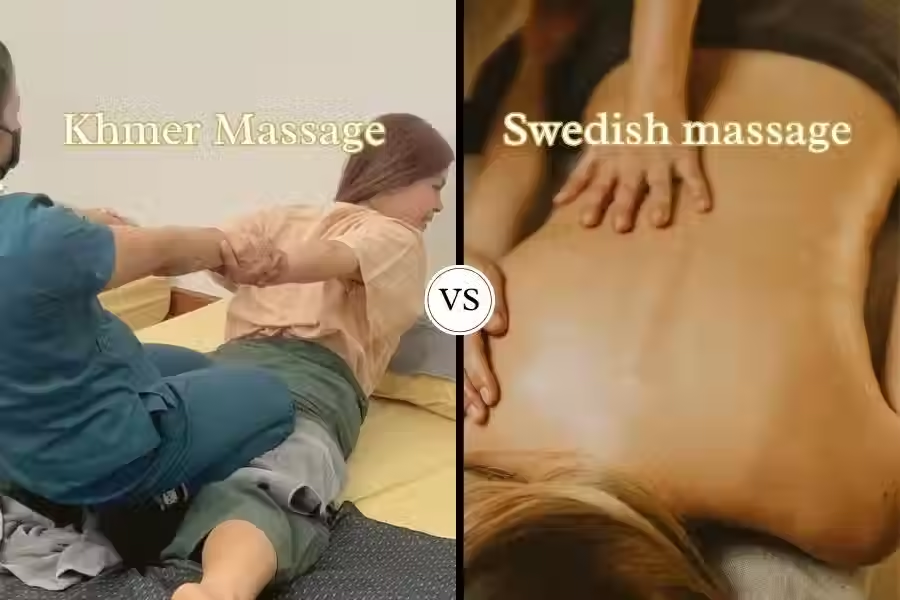
It is not a deep tissue or remedial treatment. If you are recovering from injury or looking for strong physical pressure across the body, our guide to massage types for relaxation covers a broader range of options that may suit your needs better. Japanese Head Spa is precise, gentle, and deeply restorative — a different kind of work entirely.
Key Takeaways
Japanese Head Spa is a full scalp treatment, not a head massage— the sequence moves from scalp analysis and a gold waterfall cleanse, through serum, acupressure, peacock feather, turtle machine, and facial, closing with a second gold waterfall rinse
Sessions are 60 minutes ($25) or 90 minutes ($45)— the 90-minute session extends the sequence with more time on the scalp and face work
The benefits are both physical and mental: improved scalp circulation and hair condition over time, alongside measurable stress reduction through acupressure
Cholsa Spa introduced Japanese Head Spa to Phnom Penhand refined the treatment specifically for the city's climate and the needs of guests here
It suits professionals, expats, and anyone carrying tension in their head, neck, and jaw
Cholsa Spa holds the Best Spa and Massage Destination 2025 awardand is located in Tuol Tompoung, near Russian Market, Phnom Penh
Frequently Asked Questions
How long does a Japanese Head Spa session take at Cholsa Spa?
Sessions are 60 minutes ($25) or 90 minutes ($45). The 90-minute session simply extends the treatment — more time on the scalp massage and a longer acupressure sequence across the face and neck. Both include the complete experience: opening bell, scalp analysis, the gold waterfall cleanse, serum, acupressure, peacock feather, turtle machine, facial, and a closing gold waterfall rinse.
Do I need to wash my hair before coming?
No. Your hair is washed as part of the treatment, through the gold ring waterfall at the opening of the cleansing phase. Arriving with clean or unwashed hair makes no difference to the experience or results.
How often should I come?
For scalp health goals, once every two to four weeks is generally effective. For stress and relaxation, many guests find monthly sessions sufficient to maintain the benefit. There is no minimum — some guests come once and find it answers exactly what they needed. Others build it into their routine.
Is it suitable if I have a sensitive scalp?
Yes. The treatment begins with a scalp analysis precisely so the therapist can adjust product selection and pressure accordingly. If you have a specific condition — psoriasis, seborrheic dermatitis, or recent chemical scalp treatments — mention it when booking and we will confirm whether to adjust the approach.
Will my hair look presentable afterwards?
Your hair will be washed, conditioned, and dried as part of the session. Most guests leave looking rested and put-together. If you have a specific styling preference, mention it before the session closes.
Can I combine it with another treatment?
Yes. Some guests pair it with aromatherapy or a shorter body massage. The combination works well because the head spa addresses the nervous system and scalp while a body treatment covers physical tension elsewhere. The team can suggest a sequence that flows well within your available time.
Is it only for women?
Not at all. Men and women alike find Japanese Head Spa valuable — our guests lean slightly toward women, but the treatment addresses scalp health and stress without any distinction. Men with shorter hair often find the scalp acupressure particularly direct and effective.
Where is Cholsa Spa located?
We are in Tuol Tompoung, near Russian Market in Phnom Penh — easy to reach from BKK1 and the surrounding areas, and calm enough that the transition into the treatment begins before you sit down. Booking details and directions are on the Cholsa Spa website.